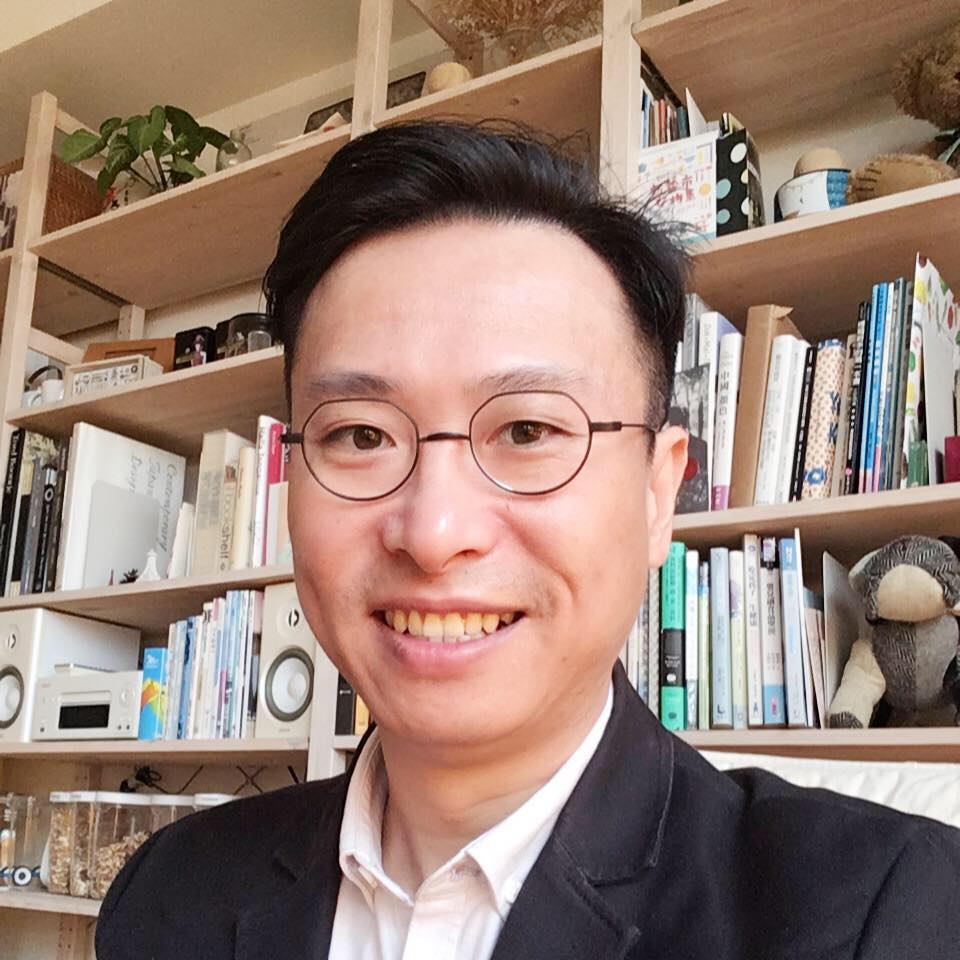
Professor of Human-Centered AI, AIMS Fellows Program, National Tsing Hua University
Convernor, Innovative Design Program
Admissions Convernor, Innovative Design Group of Tsing Hua Interdisciplinary Program
Senior Editor, IJHCS
Advisor, Taiwan Artificial Intelligence Association (TAIA)


Yuan-Chi Tseng is a Professor of Human-Centered AI Design in the AIMS Fellows Program, an intercollege executive master’s program for smart manufacturing. He also serves as Convener of the Innovative Design Program and Convener of the Admissions Committee for the Innovative Design Group within the Tsing Hua Interdisciplinary Program.
His work is grounded in Human-Centered Artificial Intelligence (HCAI), integrating perspectives from design, informatics, psychology, and artificial intelligence to address real-world challenges in healthcare, education, team and organizational collaboration, and smart manufacturing. Across these domains, he examines how emerging technologies can be designed to strengthen human understanding, participation, agency, judgment, and responsible action.
A central question guiding his research is how AI systems can collaborate with people in meaningful, intelligible, and responsible ways. Rather than treating AI as a purely automated tool, he conceptualizes it as part of a hybrid intelligence system in which people, AI agents, data infrastructures, organizations, and social contexts jointly shape decisions, actions, and responsibilities. His work investigates how AI can support human judgment, coordination, creativity, accountability, and collective decision-making in complex real-world settings.
Research Interests
Yuan-Chi Tseng founded the inclusive inter-intelligence Design Lab (iiiD-Lab), where he adopts design-driven and interdisciplinary approaches to systematically investigate human-in-the-loop design, hybrid intelligence, agency, ownership, appropriate trust, responsibility allocation, and multi-agent collaboration. His work seeks to design AI systems that support human understanding, decision-making, collaboration, and responsible role allocation.
- Human-Centered AI Design
This research direction investigates how AI systems should be designed to ensure that people retain the capacity to understand, intervene, exercise judgment, and act responsibly when AI becomes involved in decision-making, service processes, and everyday practices. Key topics include human-in-the-loop design, appropriate trust, role and responsibility allocation, intelligibility in use, and responsibility-oriented frameworks for human–AI collaboration. Rather than focusing solely on automation and technical performance, this work examines how people interpret AI-generated information, intervene in AI-mediated processes, calibrate their trust in intelligent systems, and remain active and accountable participants in decision-making.
- Human-AI Agent Interaction and Multi-Agent Collaboration
This research direction examines how AI agents, particularly conversational agents based on large language models, mediate communication, collaboration, and creative co-creation among individuals and teams. It also explores how these agents can assume differentiated and complementary roles across team, organizational, educational, healthcare, and smart manufacturing contexts. Key research topics include role configuration, task allocation, and coordination mechanisms in multi-agent systems; AI-mediated interaction patterns; and how people understand, trust, question, supervise, and appropriately rely on multiple agents working together. This work seeks to develop AI-mediated interaction patterns that strengthen shared understanding, effective coordination, collaborative work, and informed human decision-making.
- AI-Driven Digital Health
This research direction investigates how AI agents can be designed and deployed in healthcare and medical-service contexts to support personal health management, patient–clinician communication, collaboration among healthcare professionals, and team-based clinical care.The research emphasizes human-centered, contextualized, culturally sensitive, and responsibility-oriented design. It focuses on the usability, intelligibility, clinical integration, ethical accountability, and social impact of AI in real-world healthcare settings rather than concentrating solely on algorithmic performance or technical efficiency. It also examines how AI can be appropriately integrated into care relationships, clinical workflows, and everyday health practices.
Taken together, these research directions are concerned not merely with how much AI can accomplish, but with how AI should be designed to collaborate with people in meaningful, intelligible, and responsible ways in the real world. The broader objective is to create AI systems that generate positive effects for individuals, organizations, and society.
Academic Research and Honors
Yuan-Chi Tseng has an interdisciplinary academic background spanning design, the humanities and social sciences, interactive technologies, psychology, and scientific research. His work has been published in major international journals and conferences across digital health, human–computer interaction, artificial intelligence, experimental and cognitive psychology, behavioral neuroscience, medicine, neurology, cognitive science, and educational science.
His research and scholarly contributions have received numerous honors, including the Distinguished Research Award in 2025 and the Excellent Research Award in 2026 from the Tsing Hua Talent Development Fund at National Tsing Hua University; Full Membership in Sigma Xi, The Scientific Research Honor Society, in June 2024; the ACM CSCW 2023 - The Recognitions for Contributions to Diversity and Inclusion Award inr 2023; the Wu Ta-You Memorial Award from Taiwan’s National Science and Technology Council in 2017; and multiple Best Paper and Poster Awards at TAICHI and other international conferences in human–computer interaction and design.Academic Research and Honors
Academic Service and Appointments
Tseng currently serves as Senior Editor of the International Journal of Human-Computer Studies (IJHCS), a prominent international journal in human–computer interaction, a position he has held since January 2025. He previously served as Associate Editor of the journal from June 2023 to December 2024.
Tseng currently serves as Senior Editor of the International Journal of Human-Computer Studies (IJHCS), a leading international journal in human–computer interaction. He has served in this role since January 2025, following his appointment as Associate Editor from June 2023 to December 2024. He also serves as an Advisor to the Taiwan Artificial Intelligence Association (TAIA), contributing to the advancement and broader development of artificial intelligence in Taiwan.
His academic career has spanned multiple disciplines and international research environments. His major academic appointments include: Visiting Professor at the UCL Interaction Center (UCLIC), University College London (2023.2~2023.8) ; jointly appointed faculty member in Industrial Engineering and Engineering Management, NTHU (2019.8), Associate Professor in Service Science at NTHU (2018.8~2024.1); Assistant and Associate Professor in Industrial Design at National Cheng Kung University (2011.8~2018.8); Rachel C. Atkinson Postdoctoral Fellow in visual cognitive science at the Smith-Kettlewell Eye Research Institute;(2010~2011); Postdoctoral Researcher in Psychology at the University of Illinois Urbana-Champaign (2008~2010) and Visiting Scholar at the Yale School of Medicine in Professor Chiang-Shan Ray Li ’s lab (2010).
Interdisciplinary Innovation Education
In educational leadership, Tseng serves as Convener of the Innovative Design Program and Convener of the Admissions Committee for the Innovative Design Group within the Tsing Hua Interdisciplinary Program. Through institutional development, curriculum design, and student admissions, he has continued to promote design-driven, interdisciplinary, and human-centered AI education at National Tsing Hua University.
His educational philosophy emphasizes interdisciplinary integration, problem-based learning, design thinking, and engagement with real-world contexts. He encourages students to integrate perspectives from technology, engineering, the humanities and social sciences, and design in order to understand the complex relationships among artificial intelligence, individuals, organizations, and society.
Design Philosophy
Yuan-Chi Tseng’s design philosophy integrates perspectives, knowledge, and methods from technology and engineering, the humanities and social sciences, and art and design. It seeks a harmonious integration of truth, goodness, and beauty through design.
He views design not merely as a means of solving problems, but as a reflective, humanistic, and ethical practice. Design should not only enhance the functionality and performance of technology, but also consider how technologies can coexist meaningfully with human life, organizational practices, and social development.
His design philosophy therefore emphasizes that technological development should serve human values, uphold human dignity, agency, and responsibility, foster responsible innovation, and improve the quality of individual and collective decision-making and social well-being.

