Brain-Inspired Computing and Memristors
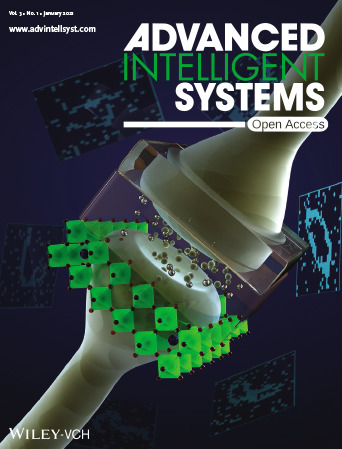
Halide perovskite memristor.
Conventional computers move data between separate memory and processing units, and that movement dominates the energy budget of modern artificial intelligence. Neuromorphic hardware computes in the same element that stores the state. Halide perovskites suit this role well: mobile ions produce gradual, non-volatile conductance changes that mimic synaptic weight update, and strong optical absorption lets the same device be programmed by light.
We build these devices by vacuum deposition, which gives exceptionally uniform switching across a wafer — a prerequisite for array operation — and have demonstrated all-vacuum-deposited inorganic perovskite artificial synapses in reservoir computing. We also develop photonic synapses that sense and remember light in one element, including transparent and flexible dual-mode devices and lead-free 2D Ruddlesden–Popper perovskite synapses for neuromorphic vision.
Current research directions:
All-vacuum-deposited halide perovskite artificial synapses. Optoelectronic and photonic synapses for neuromorphic vision. Lead-free and two-dimensional perovskite memristors. Transparent and flexible synaptic devices. Reservoir computing and in-sensor computing.